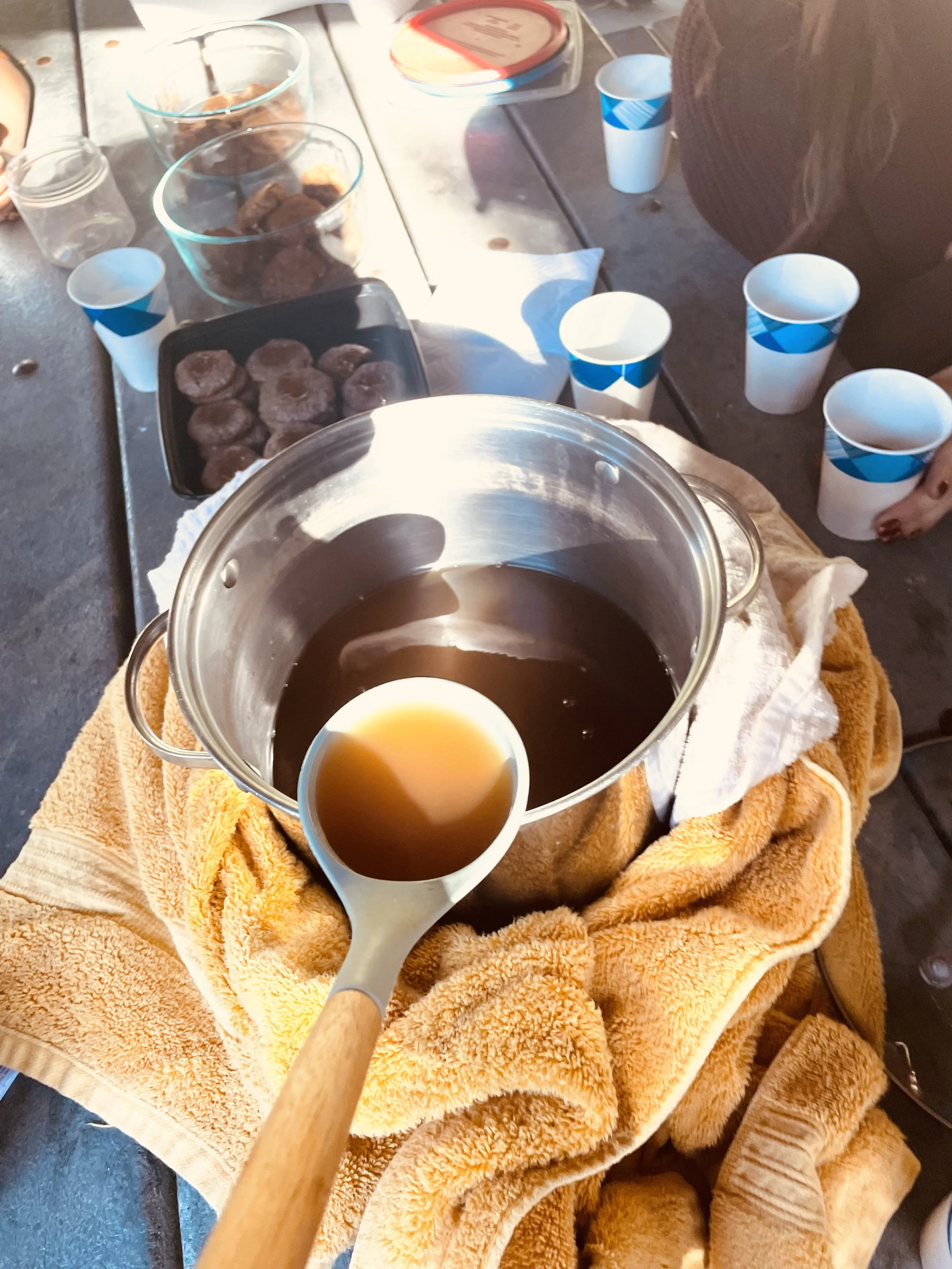
Wild Toyon Cider
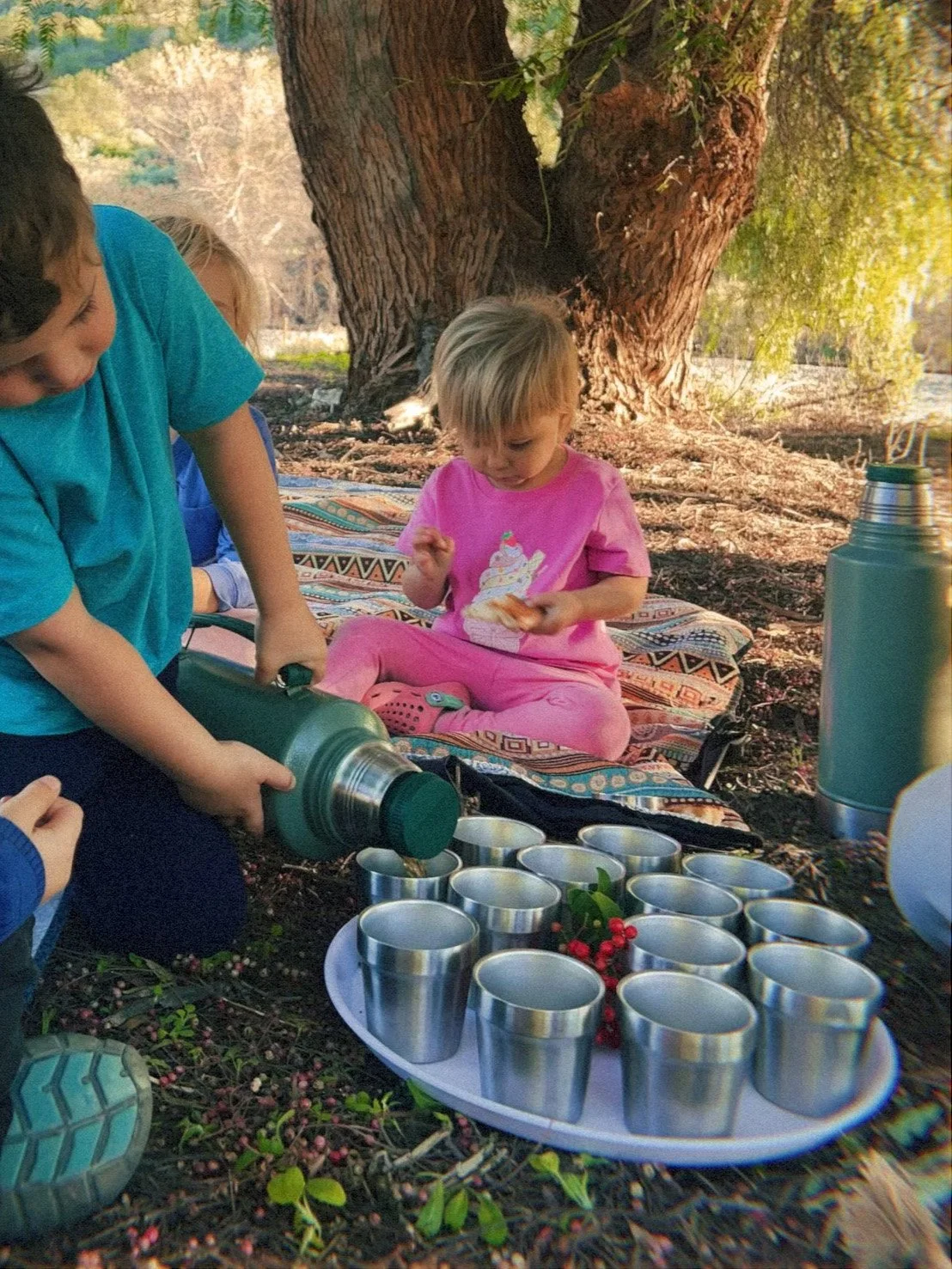
children enjoying Toyon Cider at our Holiday Celebration
‘Tis the season for… Toyon! Otherwise known as Christmas Berry. These festive red berries can be seen on hikes dotting hillsides or in edgelands along freeways starting in November / December each year.
In our area it’s a rather lean year for toyon, so we harvested only a small amount from a neighbor’s property where the plants are watered and fruiting in great abundance. This way we can leave the small harvest of berries in our wild spaces to the birds and other animals.
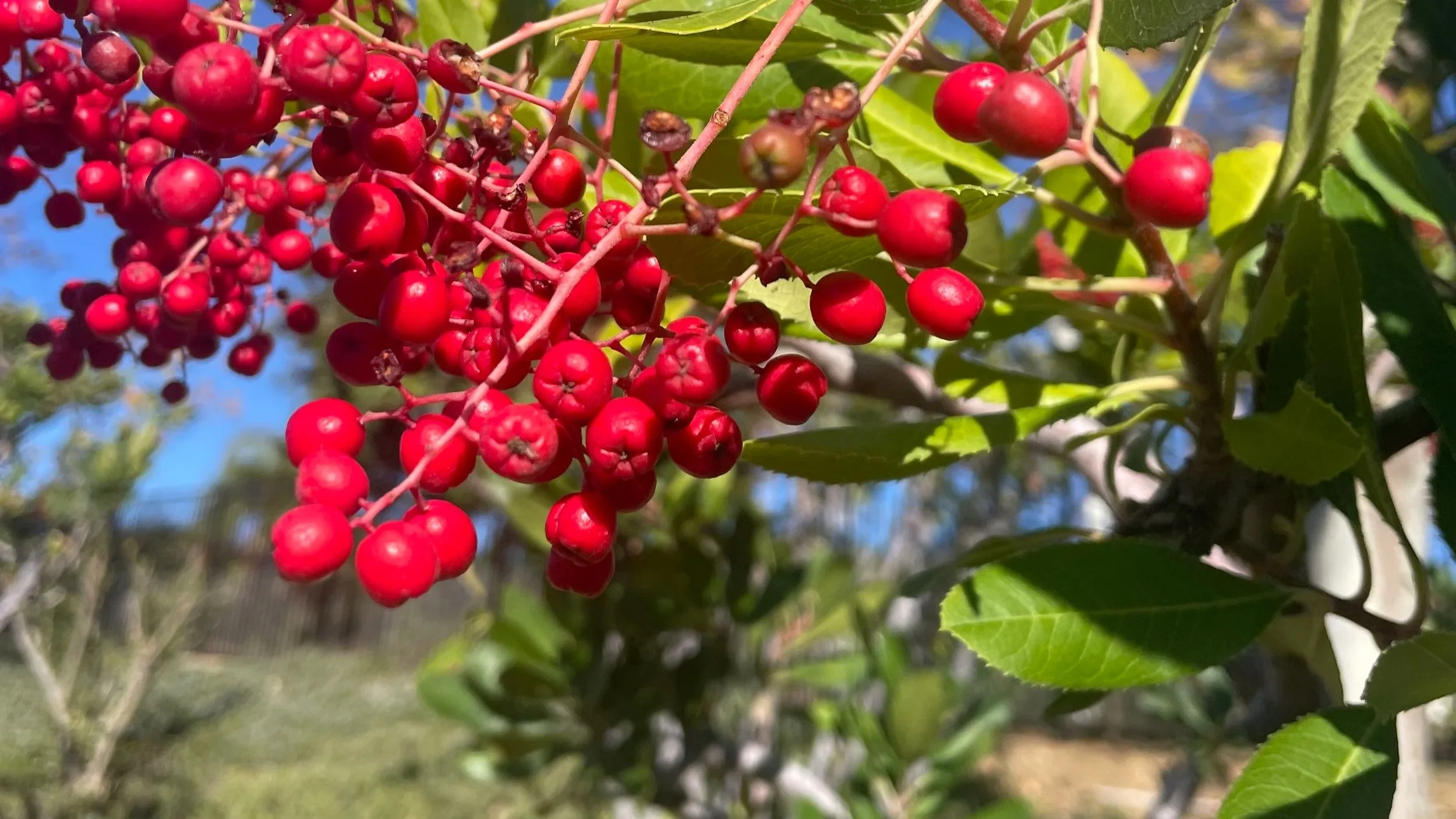
one of my favorite features of this berry (like many rose family plants) is the star on the bottom.
Toyon berries were a traditional food of the Chumash who ate them roasted or sun dried. This plant had other historic uses to. According to author Jan Timbrook in the book Chumash Ethnobotany:
“Toyon has a hard wood, which the Chumash found useful for a variety of tools and utensils. Among these were fishhooks (Henshaw 1955:152), harpoons, and bone-pointed fish spears for taking salmon (Hudson and Blackburn 1982:194). Basketry awls, matting and thatching needles, digging sticks with fire-hardened points, reamers, wedges, and hide scrapers were made of toyon. The Chumash also used this wood to make wooden pestles, bowls, drinking cups, walking sticks, war clubs, canoe pegs, and cradle frames…”
I’ll leave it there, but she goes on to describe several other uses of this amazing versatile plant.
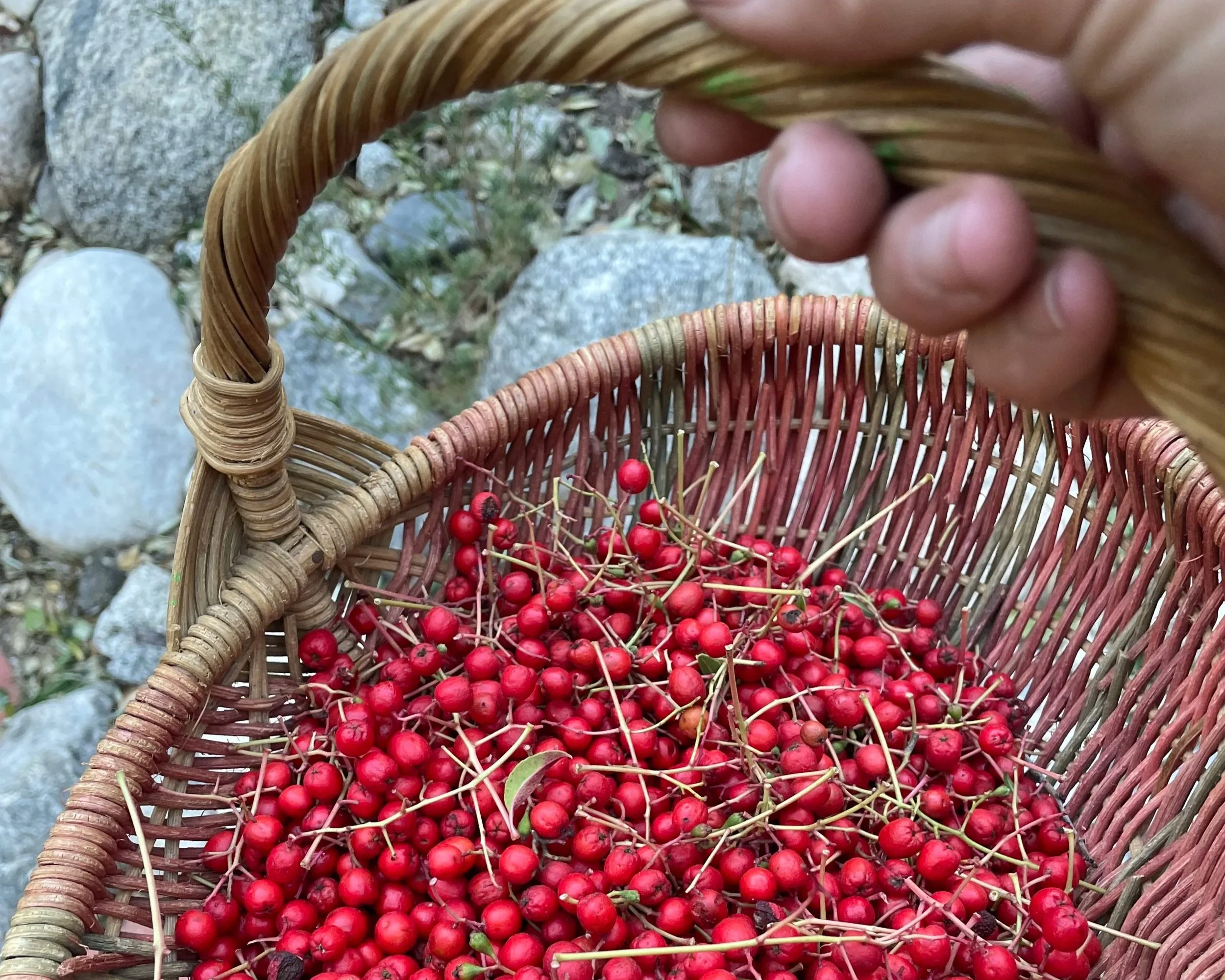
pro tip: to quickly remove the berries from the stem, rub them between your palms
Toyon berries, like elderberries, and many of our local wild foods need to be processed before consuming. Eating a large portion raw could make you sick. Ditto to eating stems or leaves. This is a good time to remind you to always be 100% sure of your ID, and to research the food you would like to consume thoroughly before sampling. Don’t just take my word for it, use many sources (including humans) and cross reference. Luckily they are not very tasty off the bush anyway— I have not seen them inspire much trail nibbling.
Once dried however, everything changes. They have a sweet, tart, apple or cherry like flavor which children love. This makes sense because they are relatives of these fruits (rose family plants). Make sure they are thoroughly dried before consuming. I dry mine in a bread proofer at 120 degrees. I let them sit for a few days rotating and stirring them until they are quite crunchy and very chewy. If they smell strongly of almonds they are not dry enough.
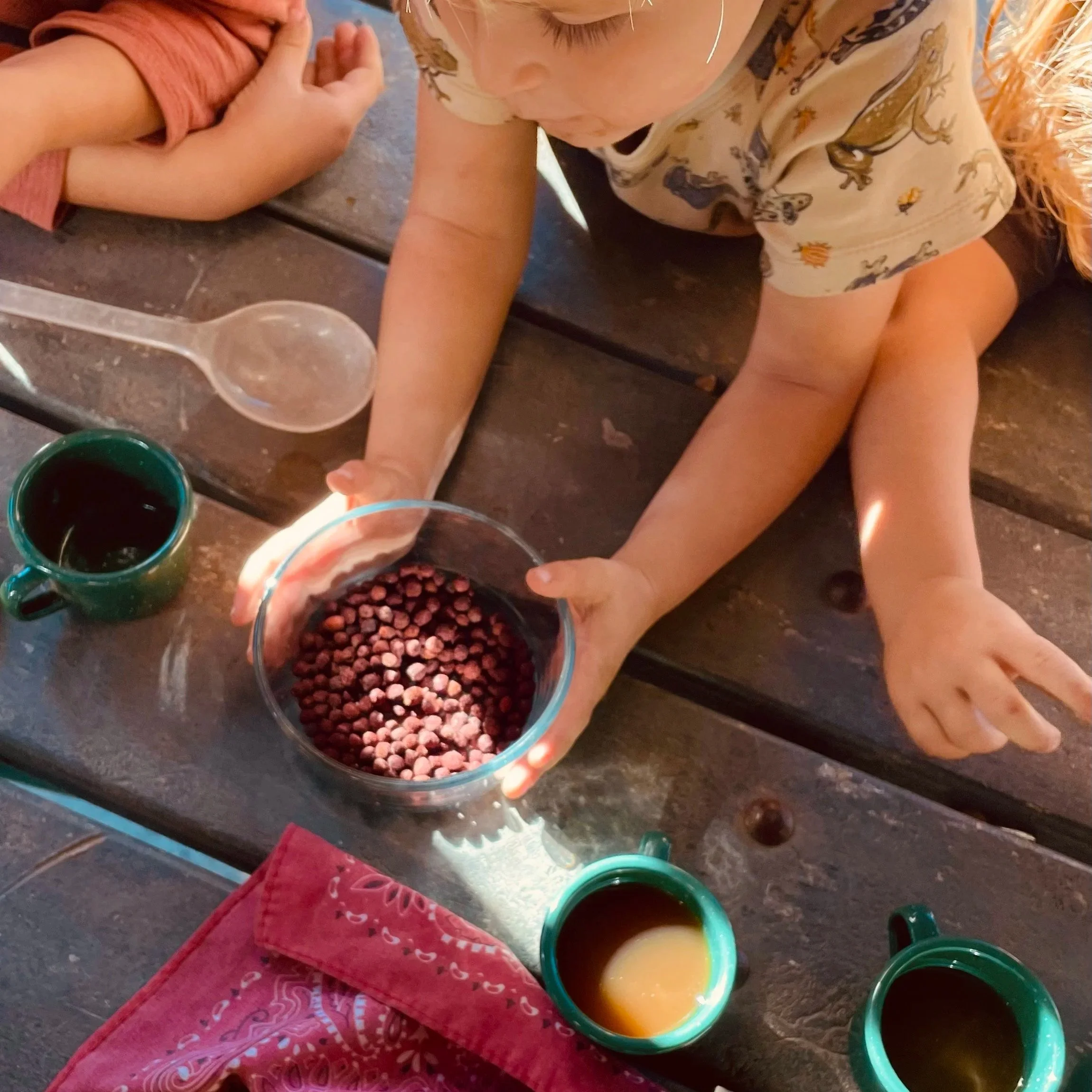
sampling the dried berries and cider at forest school
Whenever I prepare wild foods I always do so for sharing. Usually we harvest small amounts to share in our classes or at our family celebrations. There’s something so magical about preparing food directly from nature—it’s an experience worth sharing. So this recipe is for making a large soup pot full of cider.
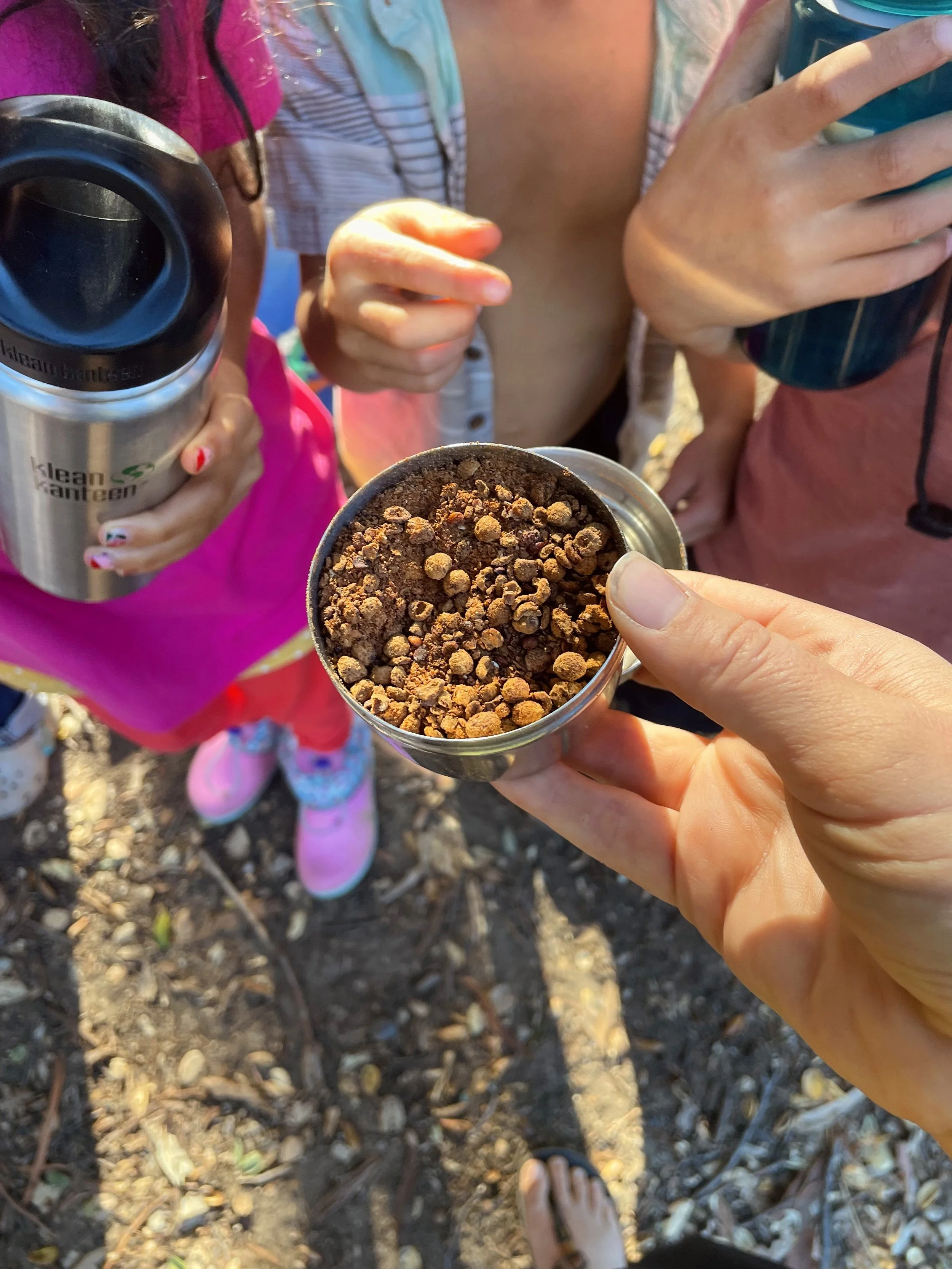
this is what the dried toyon looks like after I grind it up in a food processor
Toyon Cider Recipe (makes 1 gallon)
3/4 Cup Toyon Berries (thoroughly dried and ground)
3/4 Cup Maple Syrup (or other sweetener)
16 Cups Water
The dried berries can be ground in a food processor. It doesn’t need to be a fine powder, broken berries, some powder, and a few whole berries is fine. Add this powder, the maple syrup or other sweetener, and water to a soup pot.
Bring to a boil and then simmer for 15 minutes or so. The toyon berries will probably clump and stick together, this is normal.
Strain and enjoy!